
Supporting healthier routines through
smart medication management
Role
Product Designer
& Prototype Developer
Duration
11/4/2025 - 12/4/2025
Tools
Onshape, ESP32, MicroPython, Laser Cutting, 3D Printing, Claude AI
Team
Arghya Thallapragada
Han Jiang
Laura Iorini
Matthew S. Blumenthal
Why did we start it?
For a class project centered on building an invention with ESP32 and MicroPython, we began by brainstorming everyday problems worth solving. During a demanding exam period, a conversation about relying on vitamins to maintain our energy led to a bigger realization: if even simple health routines are easy to forget during busy times, critical medication can be too.
Problem Statement
“What happens when people forget critical medication they truly depend on?"
Consistent medication intake is essential for maintaining health. Yet in fast-paced daily life, people often forget to take supplements and prescriptions—posing serious risks, especially for those requiring regular medication.
Solution
Schedule and Track Your Medication
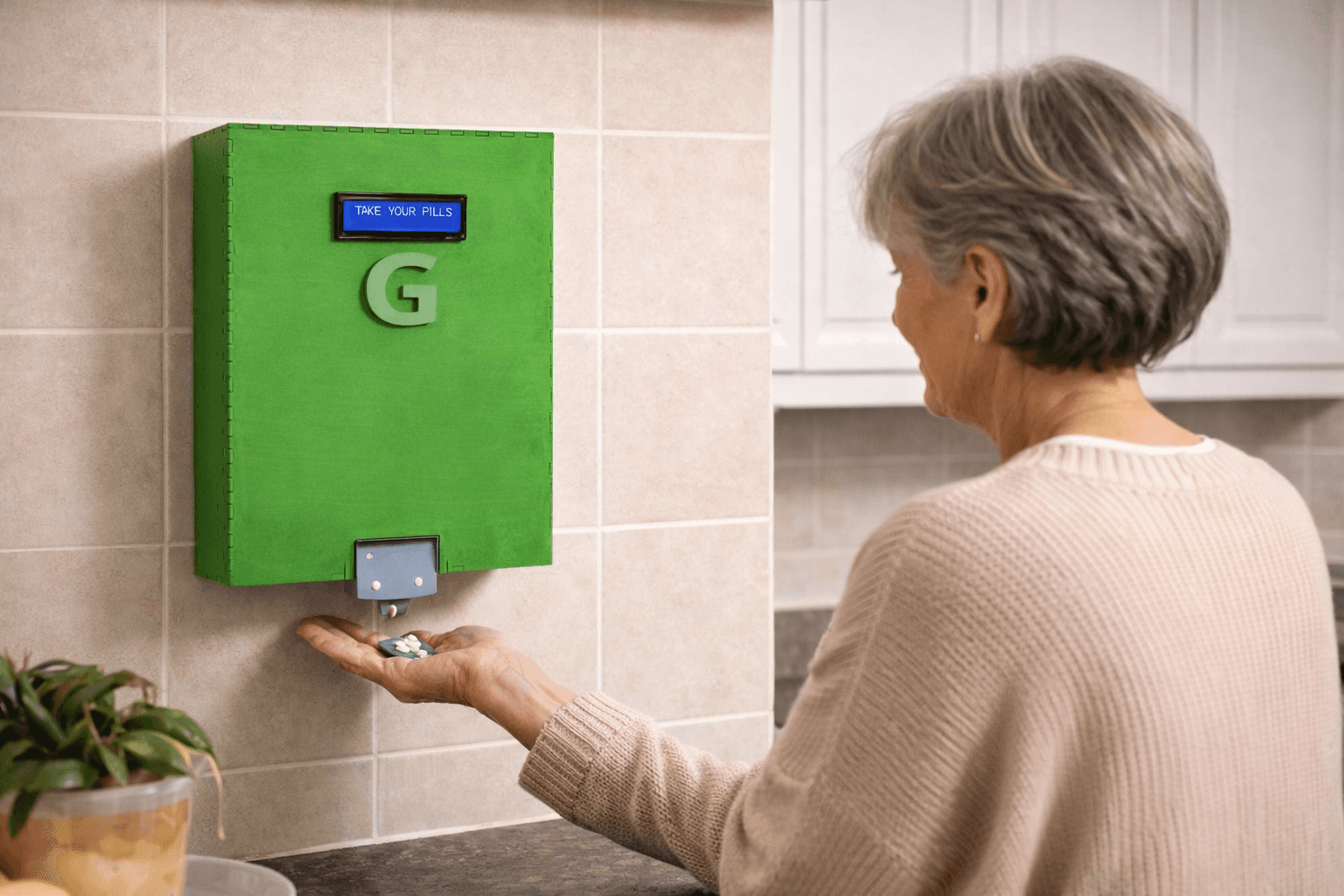
A connected medication management app synced with the pill dispenser that reduces forgetfulness and confusion by automatically tracking medication history, helping users manage daily routines more easily while giving caregivers clear visibility for more reliable support.
Reducing missed doses through timely reminders
Busy routines often cause users to forget or delay medication. By connecting the dispenser to the app, Green Health delivers direct reminders, sound alerts, and app-based prompts that reduce hesitation and make it easier to take action immediately.
Real-Time Dispensing Feedback
Users can feel uncertain about whether their request was recognized. The app provides instant system feedback and dispensing updates, reducing confusion by clearly showing that the dispenser is responding in real time.
Confirming Every Dose with Confidence
Many users are unsure whether they’ve taken their medication, increasing the risk of double-dosing. Green Health tracks daily intake and medication history in the app to confirm completion, reduce uncertainty, and support safer medication habits.
LET'S START BUILDING THE SOLUTION!
Research
We found that many people experience uncertainty around daily medication intake, often relying on memory despite the importance of consistency.
Supporting Data (n=30)
73%
forgot whether they had taken their medication at least once
68%
cited busy schedules as the main reason
82%
reported relying solely on memory to track medication intake
Insight
Users often rely on memory even when consistency is critical, creating uncertainty and self-doubt around daily medication routines. While repeated habits can feel familiar, memory alone is unreliable—highlighting the need for a system that reinforces trust, consistency, and clear daily confirmation.
Target Audience
Individuals who struggle with consistent medication adherence due to busy schedules or memory gaps, as well as caregivers seeking reliable confirmation.
Design Principles
Reduce reliance on memory
By shifting medication tracking from memory to system-supported confirmation, users can reduce forgetfulness and build more dependable daily routines.Provide clear and immediate feedback
By acknowledging every action instantly, the system can eliminate uncertainty and help users feel confident in real time.Reinforce completion and confidence
By clearly confirming when medication is taken, users can avoid missed or repeated doses while strengthening routine consistency.Keep interactions simple and intuitive
By minimizing cognitive load through straightforward steps, users can manage medication more easily within busy daily life.
Rough Ideation
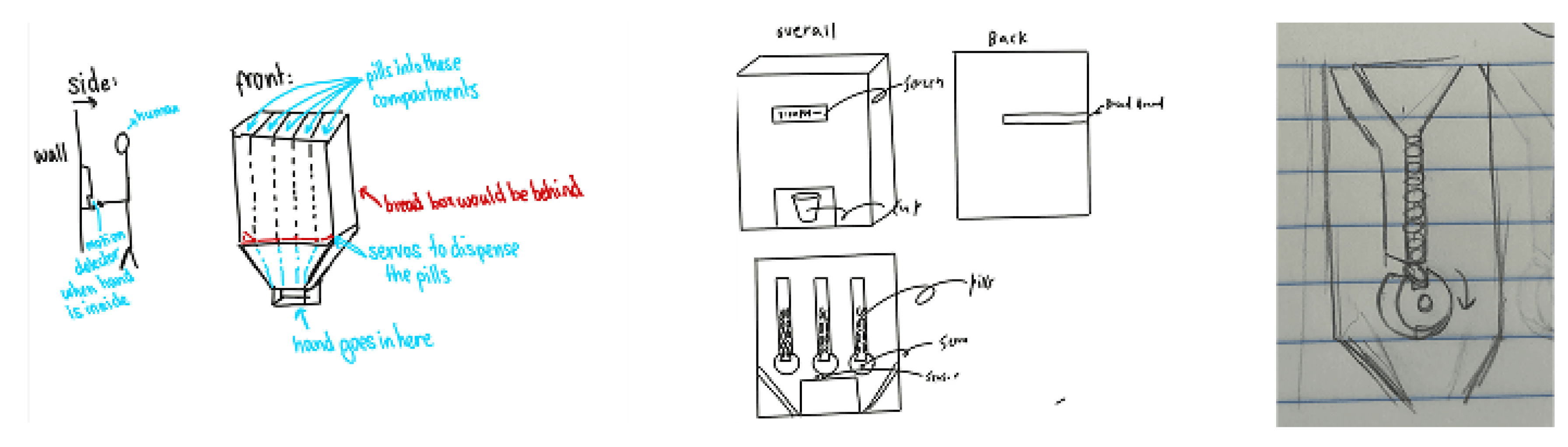
To address uncertainty in medication intake, we explored a range of concepts through quick sketches, focusing on different interaction methods and dispensing mechanisms.
Prototyping
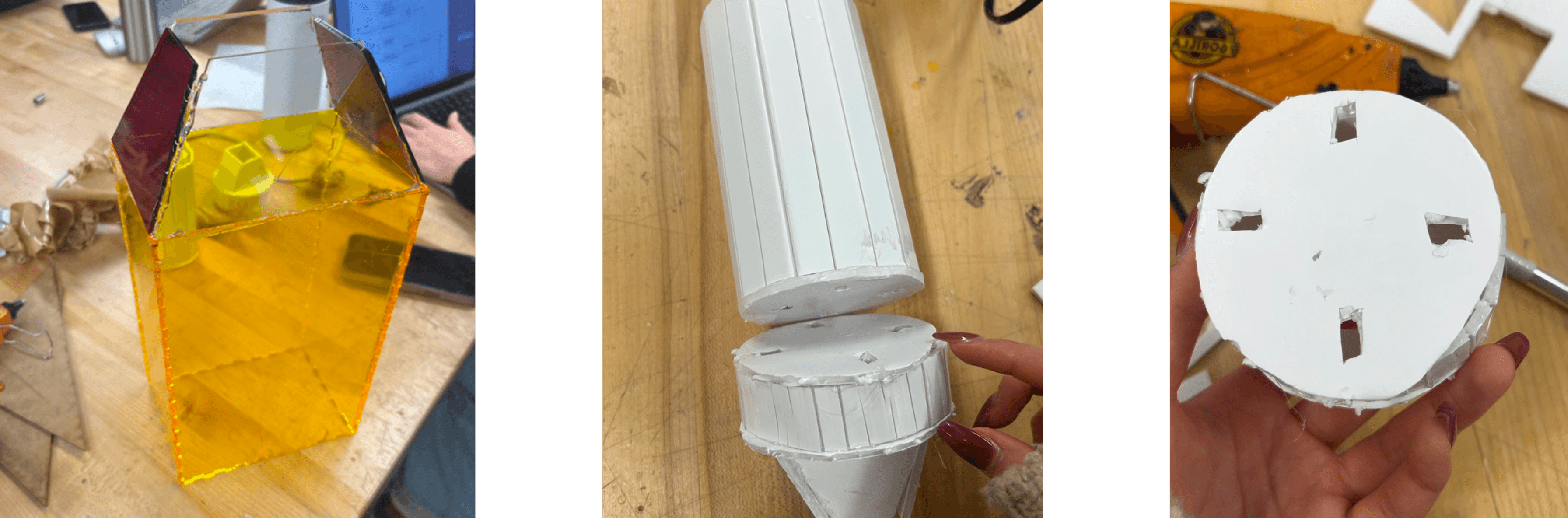
Using cardboard, we built a low-fidelity prototype to explore the physical form and interaction. Through this process, we realized that finding a structurally feasible design was more challenging than expected, requiring multiple iterations to achieve a workable form.
Trade-off & Decision
Designing for individual pill sizes increased complexity and limited compatibility,
so I shifted to a gacha-machine-inspired system for a simpler, more reliable, and universal solution.
Iteration
Using Onshape, we developed and fabricated physical prototypes through 3D printing and laser cutting to test functionality.
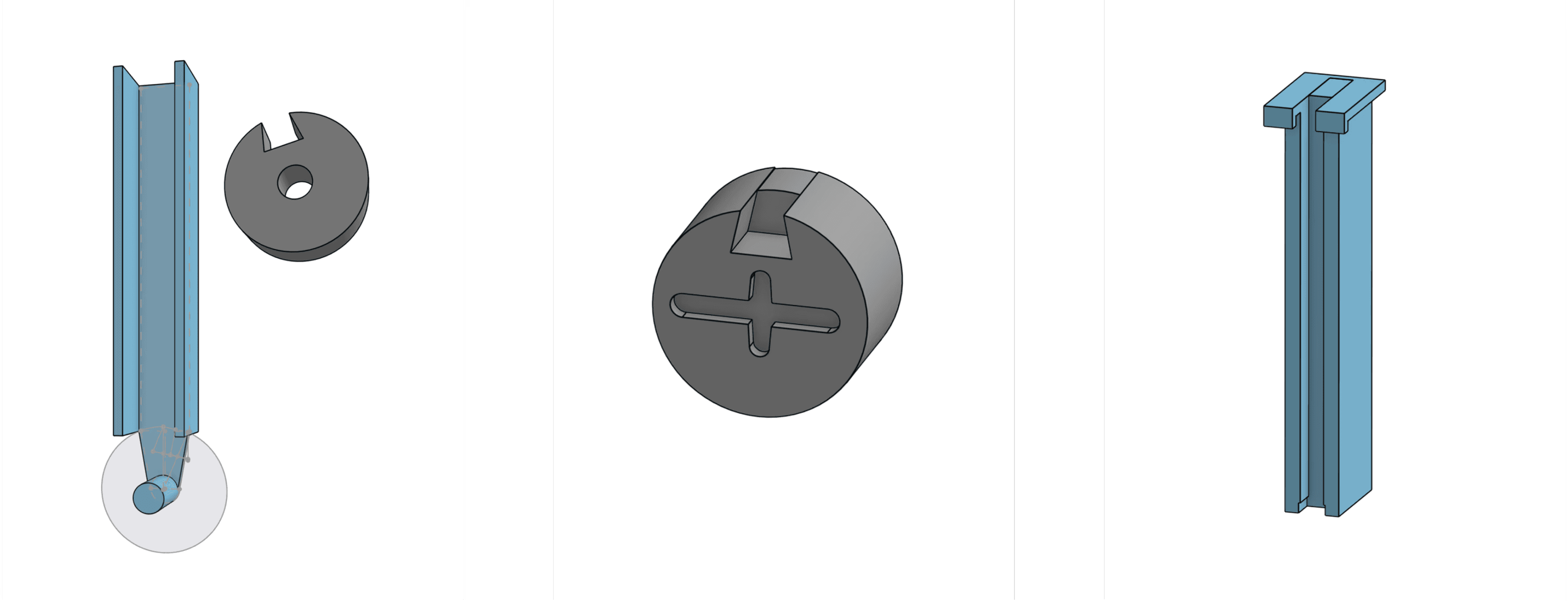
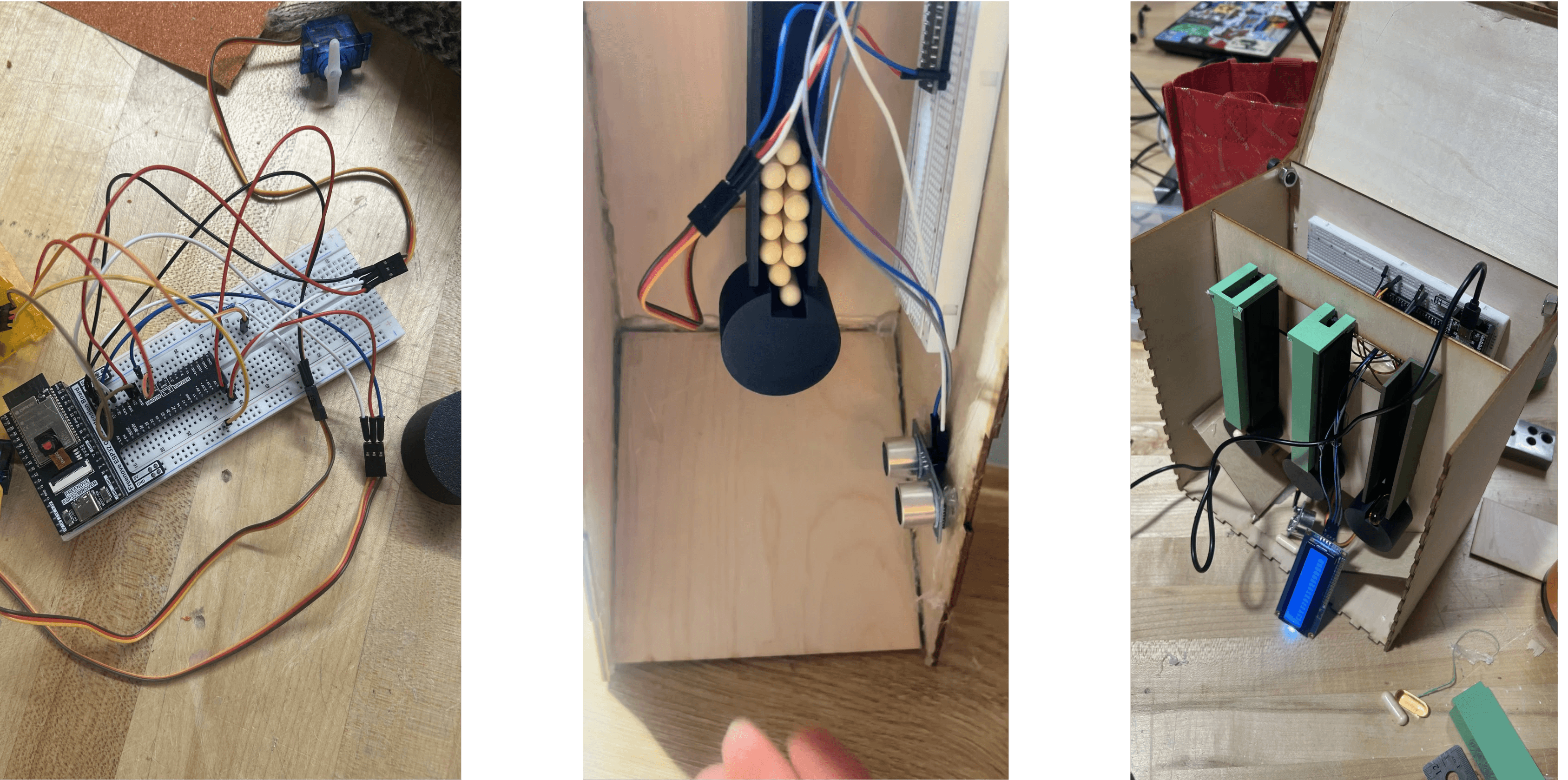
We then integrated the system with ESP32 and developed the circuit architecture to connect the physical mechanism with responsive digital interaction.
System Implementation
Using an ESP32, we integrated the display, sensor, and servomotor to enable interactive functionality. This enabled the system to detect user input and dispense pills via a rotating mechanism.
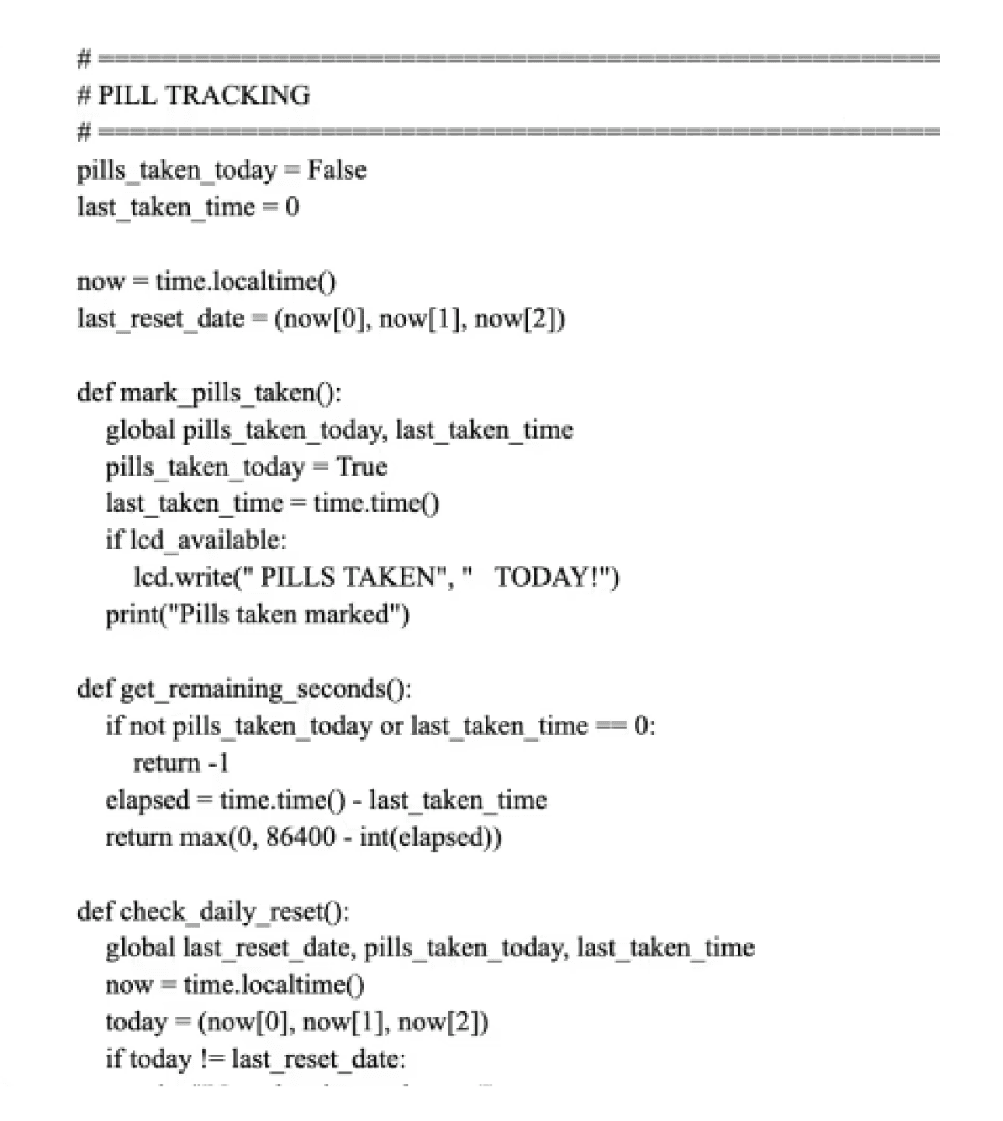
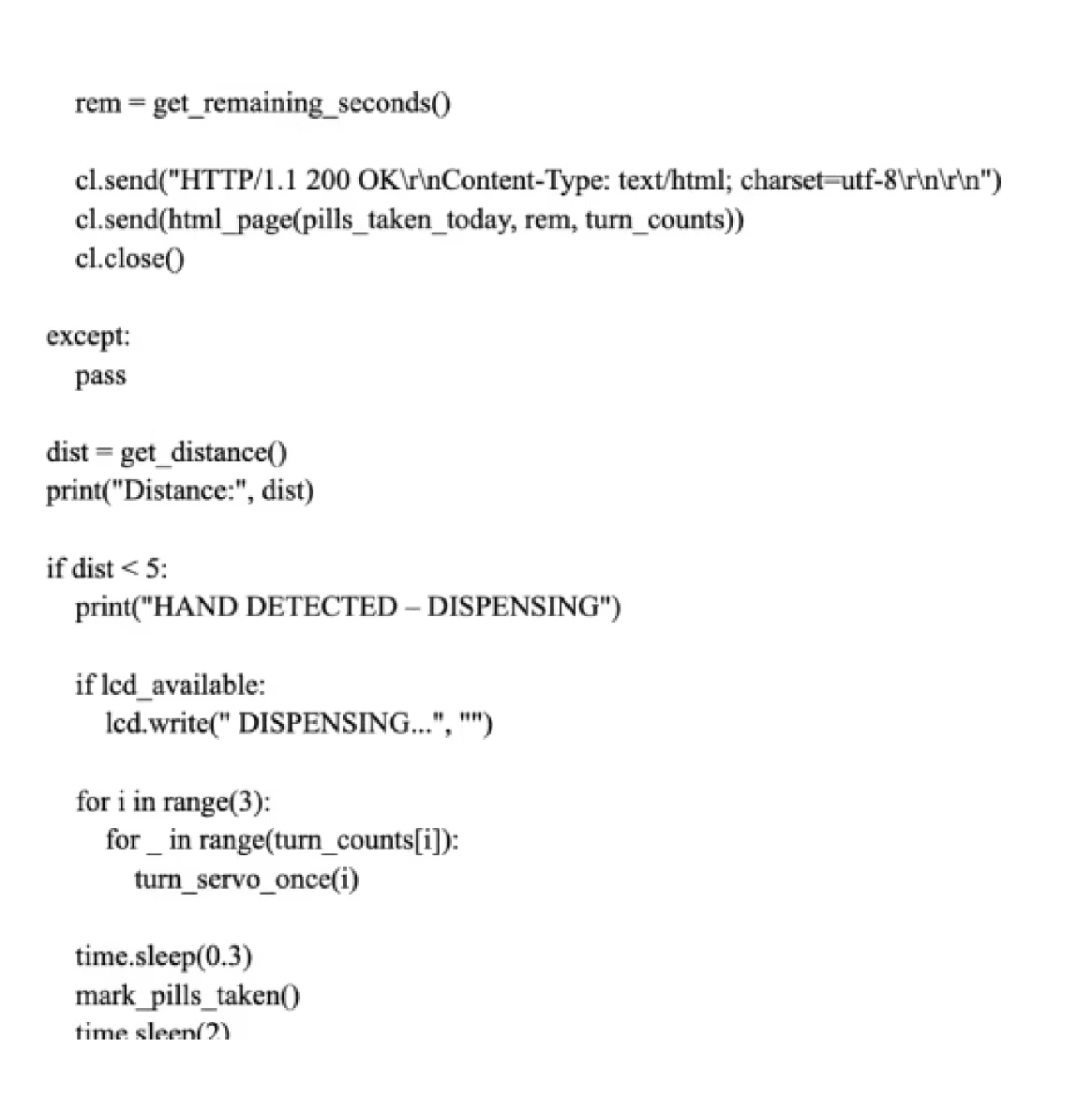
Daily Medication Tracking: Tracks whether medication has been taken, resets intake each day, and helps prevent missed or repeated doses.
Proximity-Based Dispensing: Detects when a user approaches the device and triggers servo-controlled pill dispensing with clear visual feedback.
Takeaway
This project helped me understand how internal structure and component layout directly influence user experience, not just product functionality. By designing from the inside out, I learned to anticipate user errors, accessibility needs, and real-world usage constraints early in the design process. This experience shifted how I approach product design—treating internal architecture as a core part of user-centered thinking rather than a purely technical task.

Yerin Jang © 2026. Yerin Jang. All rights reserved.